by | Jan 26, 2026 | 2D materials, Aerospace, AGM, Angstron Materials, Audio, Development, Investment, Products, Research
Researchers have demonstrated that quantum entanglement can link atoms across space to improve measurement accuracy. By splitting an entangled group of atoms into separate clouds, they were able to measure electromagnetic fields more precisely than before. The...
by | Jan 26, 2026 | 2D materials, Aerospace, AGM, Angstron Materials, Audio, Development, Investment, Products, Research
Researchers from Australia’s James Cook University and Flinders University recently announced they successfully used cheap agricultural byproduct, nanocellulose, to make graphene – using only water, rather than harsh chemicals. The team took cellulose...
by | Jan 25, 2026 | 2D materials, Aerospace, AGM, Angstron Materials, Audio, Development, Investment, Products, Research
Graphene Connect 2026 is fast becoming the must‑attend virtual gathering for the global graphene and 2D materials ecosystem, and there has never been a better time to secure your place. Over two days on 11–12 March 2026, industry leaders, researchers, and innovators...
by | Jan 25, 2026 | 2D materials, Aerospace, AGM, Angstron Materials, Audio, Development, Investment, Products, Research
Rice University researchers from the lab of James Tour have shown that Thomas Edison’s original 1879 carbon-filament light bulbs possibly included a graphene-forming regime, suggesting that one of history’s most iconic inventions may have inadvertently produced...
by | Jan 24, 2026 | 2D materials, Aerospace, AGM, Angstron Materials, Audio, Development, Investment, Products, Research
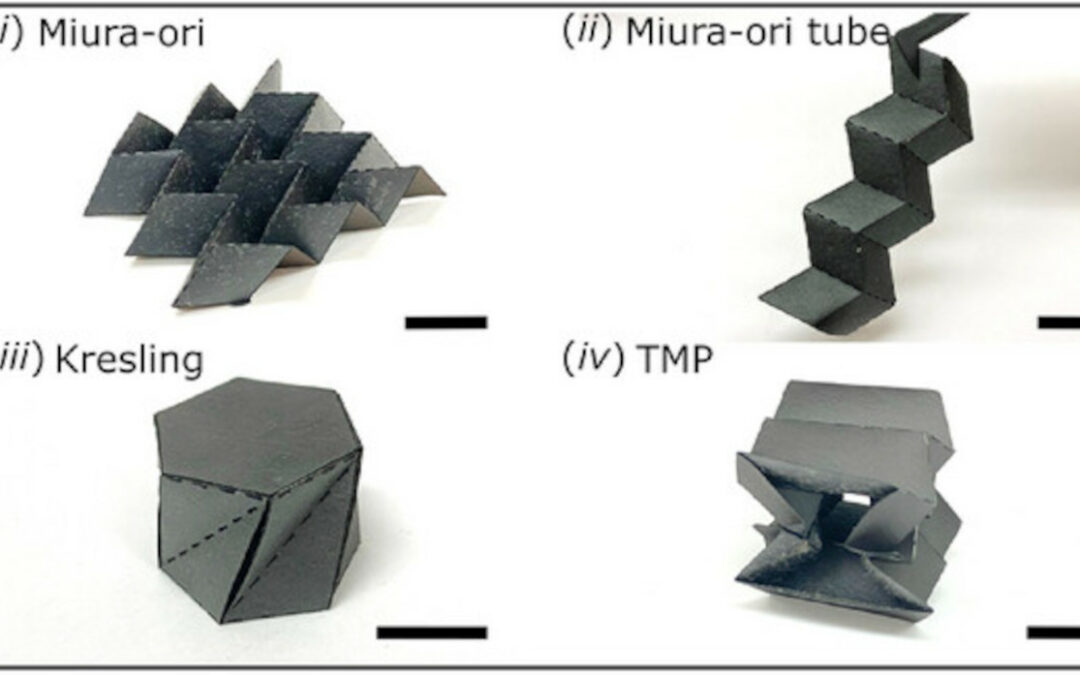
Researchers at Canada’s McGill University recently reported two separate studies focused on the development of ultra-thin materials based on graphene oxide films, that can move, fold, and reshape themselves, opening new possibilities for soft robotics and...
by | Jan 22, 2026 | 2D materials, Aerospace, AGM, Angstron Materials, Audio, Development, Investment, Products, Research
Monash Health and Monash University have received a $100,000 research grant from the Love Your Sister Foundation, through the Monash Health Foundation, to develop a graphene oxide (GO)-based biosensor for early cancer detection using circulating tumor DNA (ctDNA). The...